

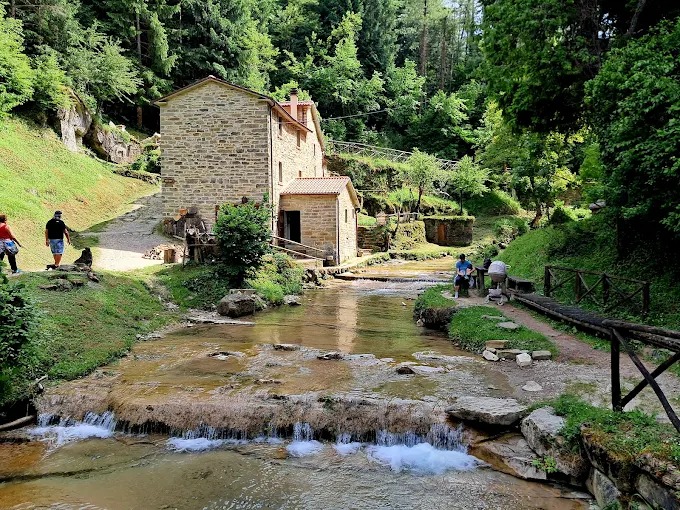
Mulino Mengozzi
Audio description
We are in Fiumicello, a small hamlet of Premilcuore, in front of the Mulino Mengozzi (Mengozzi Mill). This is an ancient mill, already known in 1544 as the Mulino delle Tagliate di Sopra. In 1595, some documents record the reconstruction of the “Bottaccio” (the water basin that feeds the mill). In 1782, the municipality granted it to Vincenzo Guidi, who purchased it in 1806. Later, the single-grind mill and the miller’s house were sold to Domenico Mengozzi; the building had two floors, each with a single room. In the first half of the 20th century, a second grindstone and an additional floor were added. The mill was used to grind wheat, chestnuts, oats, and minor cereals. After centuries of activity, it was abandoned in 1963, but in 1993 it was restored by the owners and has since resumed full operation. So, how does this mill work? The turbine is located in the almost entirely underground floor, while the water wheel, which powers the hard-stone grindstone, is on the upper floor. The flour produced is collected in a stone container called the matriccio. Water is drawn from the stream through a wooden weir and channeled into a side channel leading to the bottaccio, from which it falls directly onto the water wheel. If you find the mill open, step inside and enjoy a magical moment: it’s like traveling back in time to see how flour was once milled! From the mill, you can continue for a walk along the river and into the forest, following a path suitable for families with children. Along the route, informational panels introduce the fauna, history, and traditions of this Apennine area.
Gallery
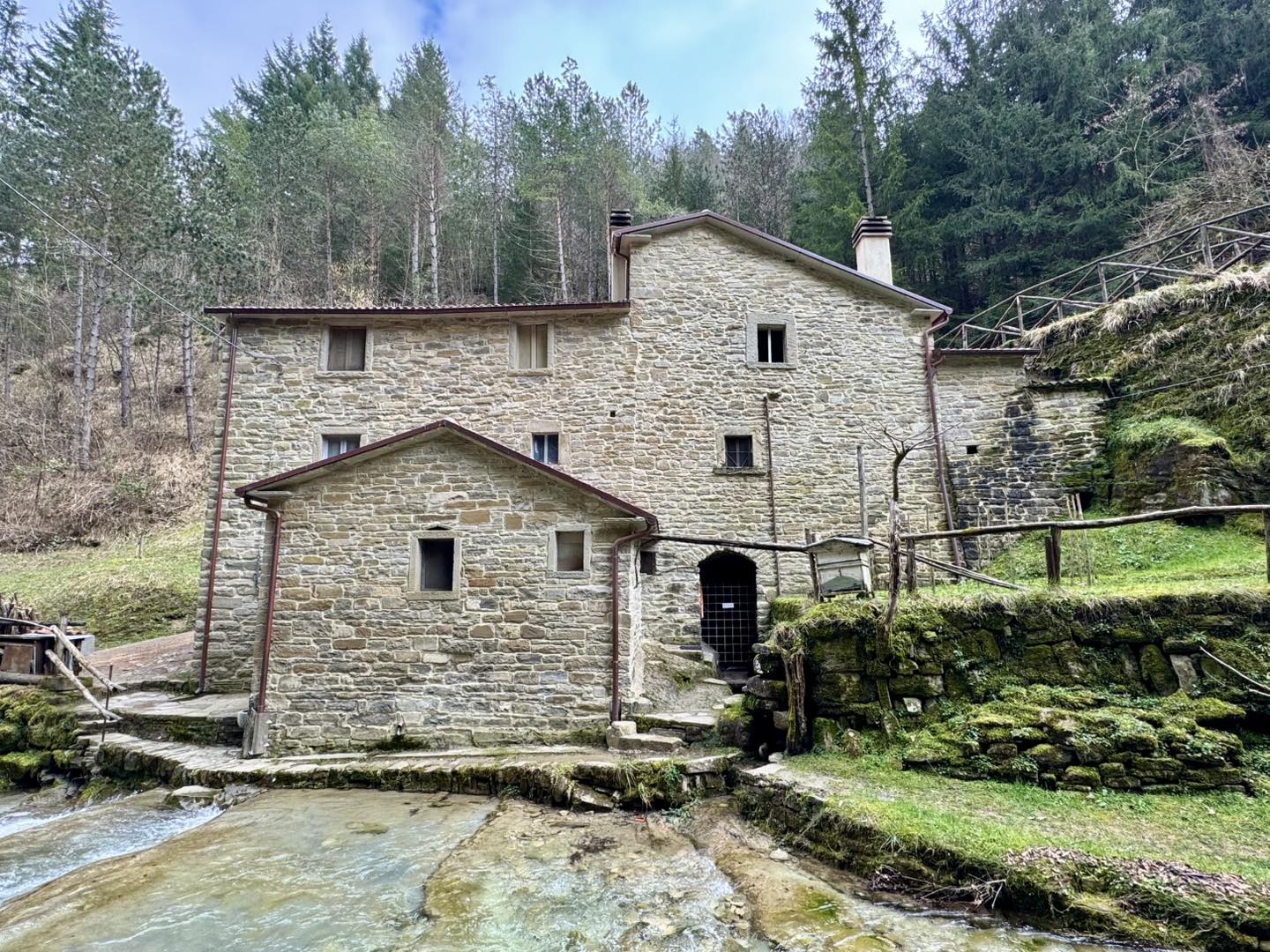
Mulino Mengozzi
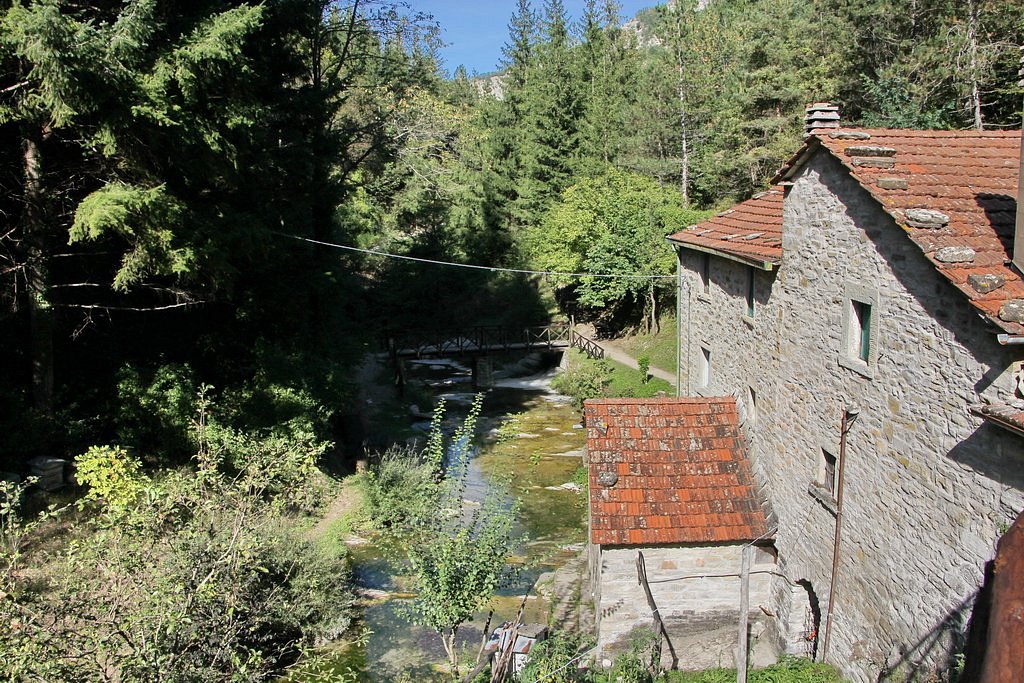
Detail of the mill façade
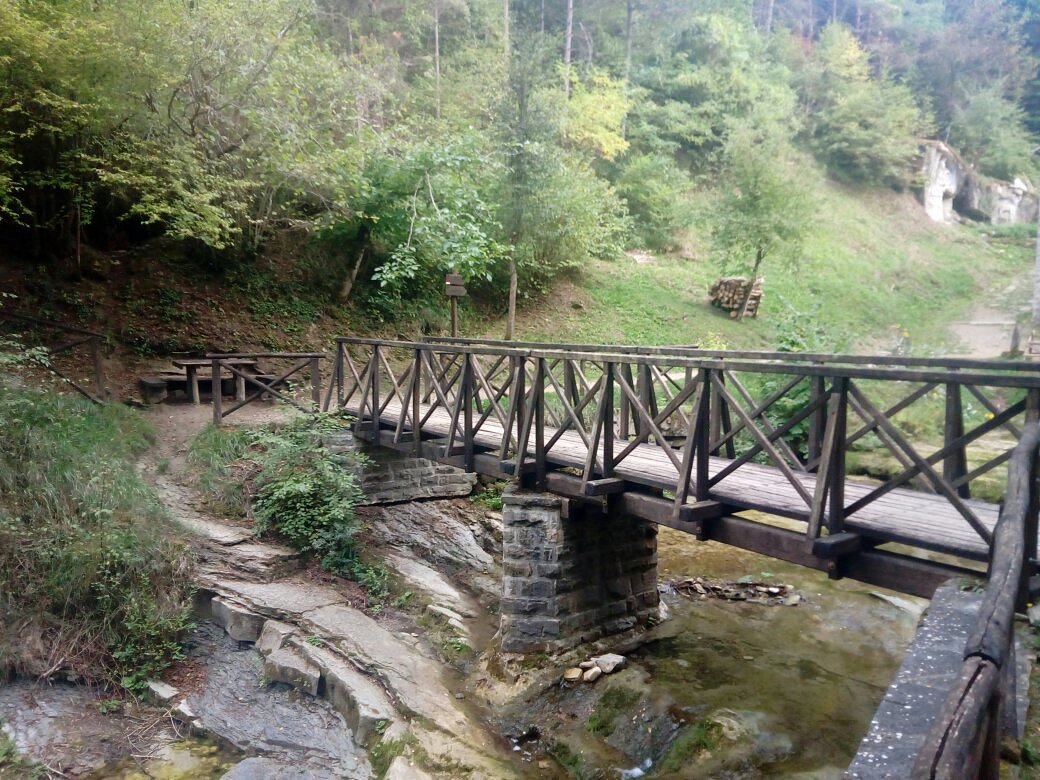
Mulino Mengozzi footbridge