


Audio description
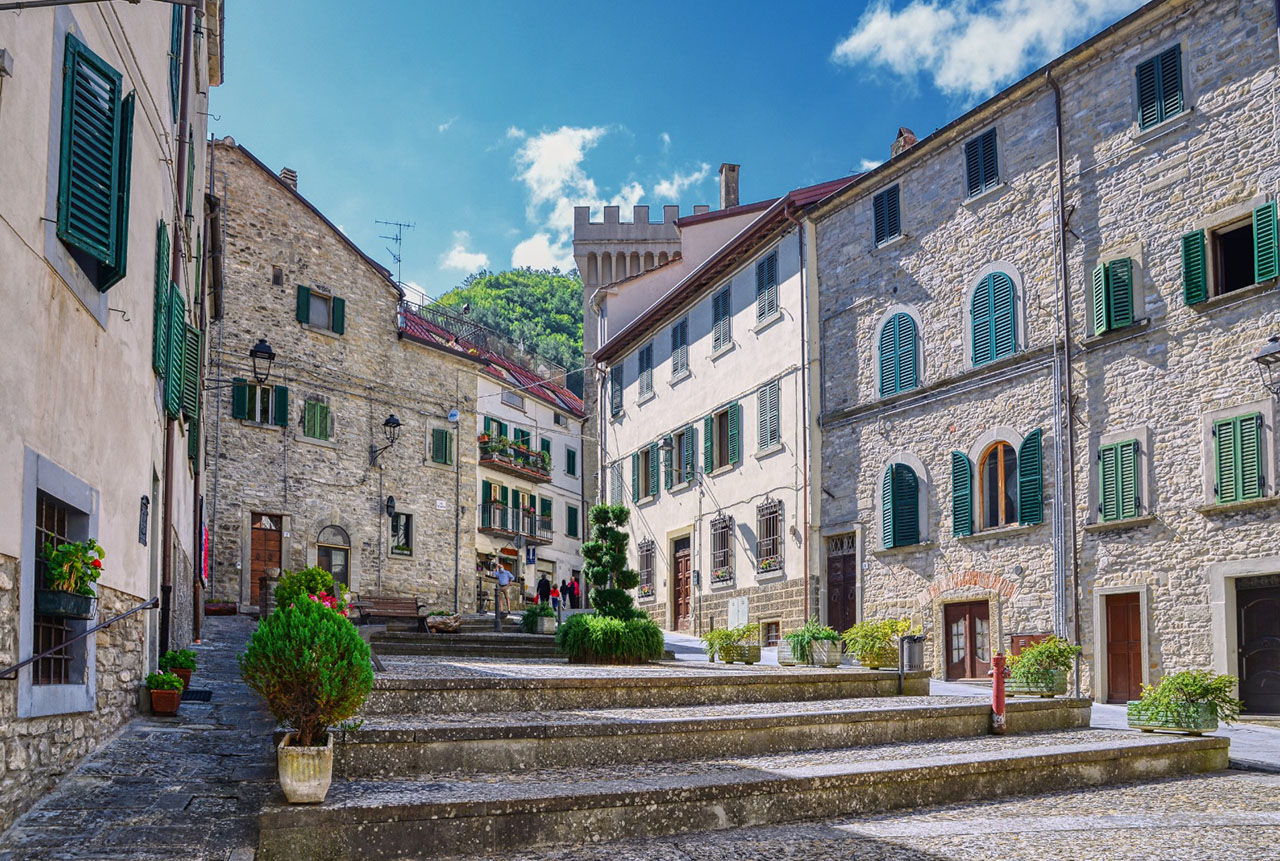
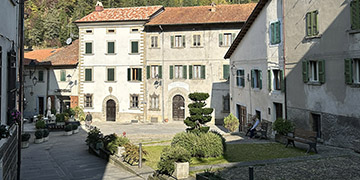
Here we are in this unusual square which, if you approach it from Via Tre Cantoni, seems to slope gently downward. The square as we see it today is the result of the demolition of a block of five buildings, carried out in 1941 from a 1937 plan, in the name of improving traffic flow and air circulation. Originally, the project was meant to cover a larger area, including the Oratory of San Lorenzo and a radical transformation of Palazzo Pretorio into a church. The reasons why the plan was never fully carried out remain unclear—perhaps the onset of the war, or perhaps objections raised by the Ravenna Superintendency. In fact, the cadastral map drawn up in April 1943 already shows the empty space created by the demolition, funded personally by Mussolini. According to local stories, the Duce opened up the square to bring light and air to the home of his sister Edvige—now known as Casa Gentilini—who supposedly wished to enjoy a clear view of the façade of San Lorenzo. The transformation of Via Lorenzo Ricci into a square was officially approved in February 1944. In the early 1950s, plans for arranging the square were approved: a small garden with hedges and flowerbeds, and a circular two-tier fountain. The little square soon became a meeting place for locals and holiday visitors alike. After a period of neglect, a renovation arrived in 1996, giving the space a stone pavement and cobblestone steps. From here, if you follow Via Rabbi, you can cross the river on the little bridge—once made of wood—and enjoy a beautiful view of the village perched above. The path then leads you to Cervetti Park. If instead you pass through the Tre Cantoni arch, you’ll find yourself in the ancient Piazza dei Caduti. And should you take Via Roma, you’ll come across the Premilcuore archives, the Oratorio del Mocio, and much more. But for now, take your time exploring this square, and don’t miss the stories behind Palazzo Biondi Perelli and the adjoining Palazzo Briccolani.
Yesterday and today

Gallery

Entrance hall of Palazzo Biondi Perelli
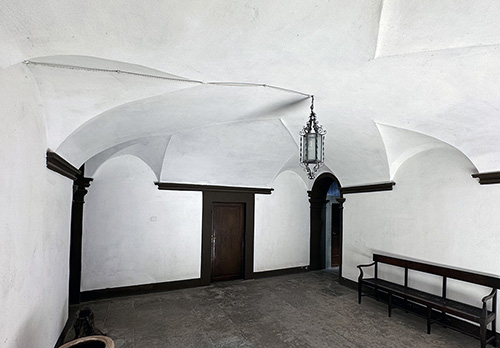
Entrance hall of Palazzo Biondi Perelli
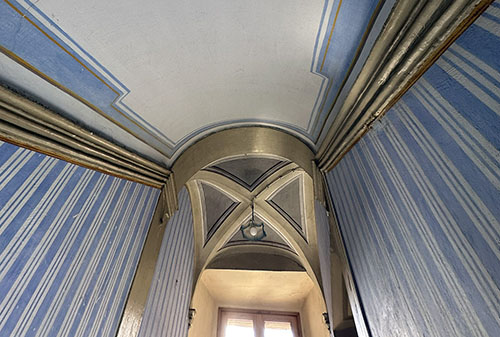
Ceiling of the internal staircase of Palazzo Biondi Perelli